
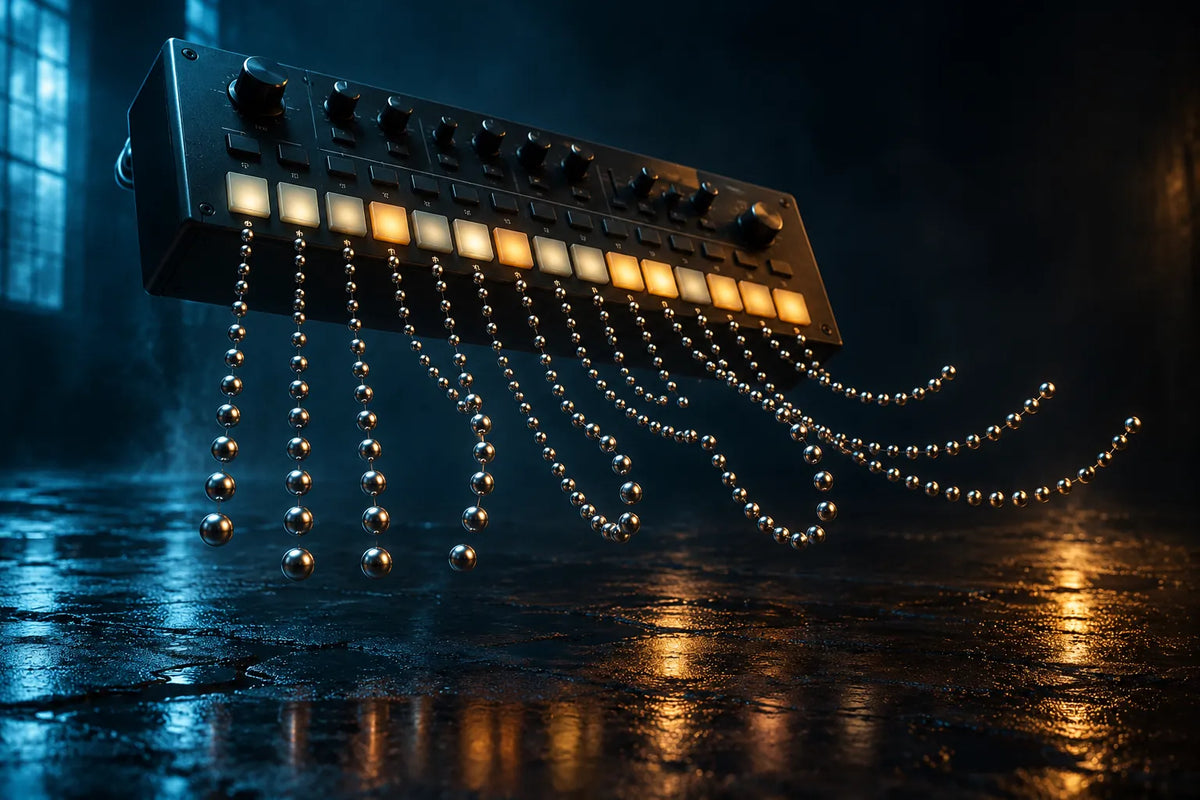
A straight grid can hold a complicated rhythm. A swinging pattern can still feel stiff. The difference is worth keeping in mind whenever a machine is asked to make something move. Programming a beat involves more than deciding which steps light up. It also involves deciding how much weight each sound carries, what it answers and which expectation it refuses.
The machine in the title has not acquired a mysterious feeling for the room. Someone is choosing how it behaves. That can mean a broad shuffle setting, a tiny edit to one note or leaving an irregularity in a recorded phrase. The useful question is what the change contributes to the pattern around it.
Separate the clock from the conversation
Ableton's groove documentation distinguishes timing from velocity: where an event falls and how strongly it is played are separate controls. It also describes taking groove information from a clip and applying it elsewhere. Those operations make a helpful listening distinction. A small accent and a small delay can draw attention to the same sound in different ways.
Keep a pulse with one hand while listening to a favourite pattern. Follow the part that makes the count clear, then the part that seems to tug against it. When your attention changes, does the pulse become lighter, heavier or harder to hold? You are looking for a relationship between events, rather than a percentage that certifies a beat as lively.
Leave an expectation hanging
Don't Walk Away Yet (UK Garage) gives that exercise a clear FARA starting point. NOVASE15 and KOSTA's version is listed at 134 BPM, with skippy drums, alternating voices and a complete stop before the reload. Follow the drums first. Then follow the returning words. The same count can support more than one route through the exchange.
The stop asks a further question: what continues when the sound does not? A listener may carry the count, anticipate a particular voice or simply wait for the bass to return. A gap can make the surrounding rhythm easier to hear because it briefly asks you to supply the connection.
A sampler offers another set of decisions
Programmed single hits are one route into rhythm. Recorded breaks offer another body of material to shape. In its jungle tutorial with Side Brain, Ableton presents a practical example built from breaks, pads and vocals, with Drum Sampler effects used to transform them. This is a production example, not a complete history of a genre.
For your own experiment, choose a short pattern and change just one relationship. Move one event, soften one accent or leave a space where a hit was expected. Keep the original nearby. If the edit has made everything busier, try taking something away. The most useful result may be a clearer invitation to move.
SEAM offers a longer FARA route through jungle and drum and bass, beginning with Gospel B-Side. Let a single detail guide a pass through the record, then change the detail on your return. The instrument has supplied possibilities. The arrangement, and your attention to it, decide which ones matter.
Original editorial illustration for FARAZINE, October 2026 · Issue 02.

