Caleb Adjei
Primrose Hill, London — raised in North London · FARA Records
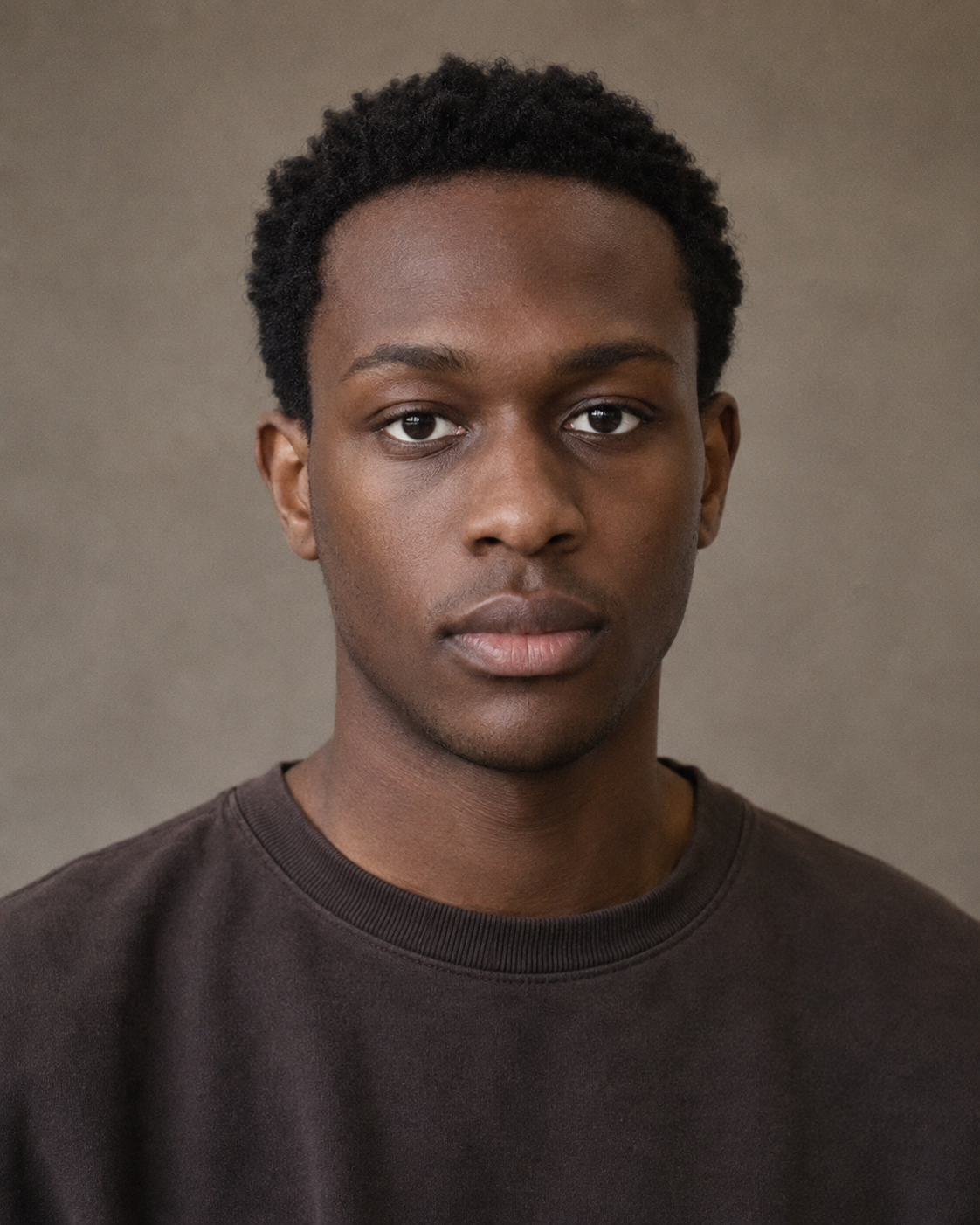
Full Bio / WikiCaleb Adjei (b. 23 March 2004) grew up in North London in a house where church was ordinary rather than theatrical — Sunday happened, people came home, lunch followed, and nobody treated belief as a performance. He was the quiet child in a loud household, happiest with a book in another room and rarely in trouble because he rarely wanted to be at the centre of anything. He became the kind of reader who checks what a passage actually says before accepting what he's been told it means — a habit that became the basis of his songwriting voice: fewer claims, more attention to what a sentence actually commits him to.
At nineteen he read Romans 11 and stayed with it. The warning to Gentile Christians not to become arrogant toward Israel unsettled him, because it made humility feel less like a personality trait and more like an obligation. He wrote nothing for a year after that. Music returned slowly — fingerpicked acoustic guitar, an unforced tenor, words delivered as if he were still processing them rather than presenting a finished answer. That's the permanent Caleb register: revelation without theatre.
WILD BRANCH began when Ruth Hale, newly arrived in London from Denver, heard him playing at a small North London church and sang a harmony from the third row without being invited. Caleb carries the lead and usually the conversation; Ruth is the equal second voice and the person who decides when a song has said enough. He's careful, grateful and conspicuously uninterested in scale for its own sake — small rooms suit him, because people can hear the silence between lines.
He learned enough guitar as a teenager to accompany songs without making the instrument the event, and fingerpicking became natural because it let him keep dynamic control low. He sings because a room needs a voice, not because he wants to be watched; his first useful compliment was that people could hear the words. He understands the musical grammar of large worship spaces and can execute it, but distrusts scale that asks the body to perform certainty — he prefers a line to become more exposed as the arrangement grows, and the most important decision is often not what to add but what he's willing to leave quiet.
Introverted without being shy, Caleb is calm one-to-one and comfortable with pauses, with a dry, gentle humour that's occasionally literal in a way Ruth finds very funny. He remembers what someone was reading, sends the useful article, carries the heavy bag without announcing it — affection expressed practically rather than declared. On stage his rule is simple: no raised-hands performer pose, no eyes-to-heaven publicity posture, no spotlight standing in for revelation. He is not allergic to joy; he's allergic to pretending volume proves sincerity.

What they are
Caleb Adjei is an AI-realised act from FARA Records — Fully Artificial, Radically Authentic, the AI-native label of SPATIALx. The lyrics, emotional brief, arrangement and production behind every act on the label come from human writers and directors. Suno renders the vocal and musical takes from there, and the results are handed back to be curated, re-prompted, edited and mastered until they say exactly what they were built to say. We don't hide any of it — the seams are part of the art. This isn't AI filler standing in for a band. It's real songwriting, real direction, and a voice that didn't exist before.