
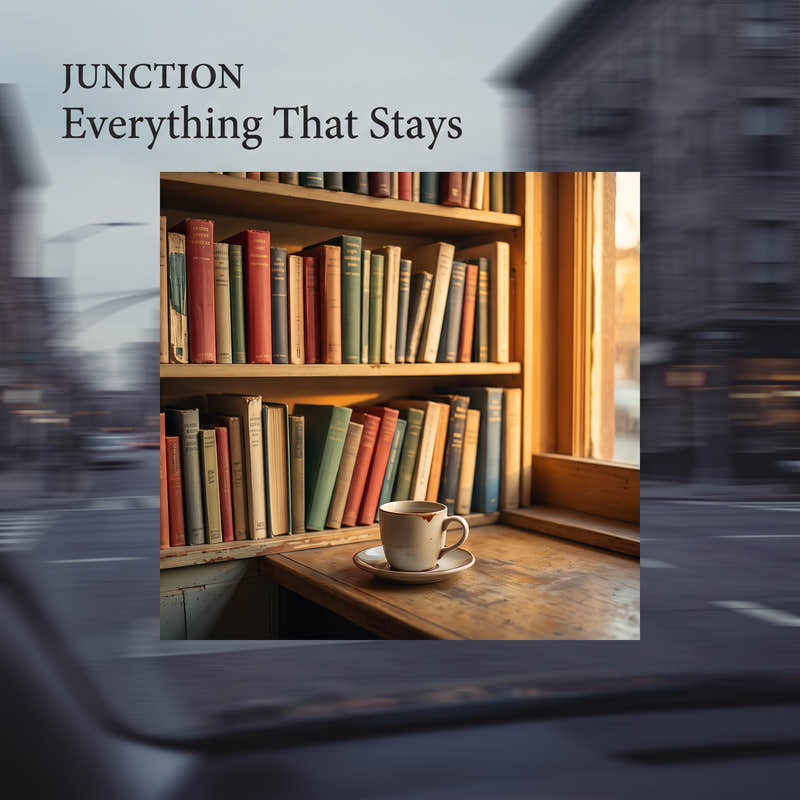
JunctionSingle

FARA Records / Artist
Junction (born Julian Ashe, 23 March 2003) is a British-American indie-rock artist from New York City. Signed to FARA Records, he's known for interlocking clean guitar lines, melodic bass, and a quiet-urgent voice that sits fractionally late against the beat — treating tempo and structure as part of the lyric's argument rather than its container.
Junction takes his name from his own writing: the ordinary crossing-point you can pass without noticing the direction of your life has already changed.
Junction grew up in New York City in a home where two record collections shared the same shelf — his English father's jangly post-punk and 1980s guitar pop, his American mother's 1990s college rock. He didn't inherit them as opposing camps; what he heard was the common language between them, clean guitar lines crossing each other, melodic bass doing more than marking roots.

That instinct shaped how he noticed the world — drawn to the minor evidence left after something changes: a mug kept on the same side of a counter, books returned to a shelf in the wrong order. He wasn't interested in inflating those details into symbols before they earned it; their power came from staying ordinary. His songs began to behave like arguments made through form — a tempo could be defensive, a guitar line could hold one thought while another countered it.
Everything That Stays makes the philosophy explicit: the first section moves at 126 BPM and feels capable of carrying itself forward, then the surface pace falls to 84 BPM and the real subject arrives — the small persistent actions that only become visible once they stop being automatic. The final return to 126 doesn't cancel the slow section; it changes what forward motion means after the listener has heard the stillness underneath it. His vocal follows the same logic: important lines often become quieter rather than louder, and a chorus can rise in pitch without rising in volume.
The tempo is the argument — everything that stays, stays changed by the going.
Publicly, Junction is precise without being precious — literary because he cares about exact language and ordinary detail, not because every answer needs a quotation. His humour is dry and often practical; he'd rather explain why a bass note changed the emotional balance of a chorus than describe a song as “cinematic” and leave it there.

Junction's catalogue rewards close listening rather than spectacle, and fans have built a habit of noticing the same way he writes — one changed word, one delayed musical element, one small object returning later in a different song. He's known for treating tempo maps almost like lyric drafts, a level of structural thinking that's become part of how his listeners talk about the songs themselves.