
FARA Records · Digital release
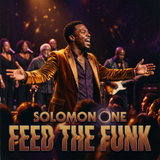
Feed the Funk
A song about the real thing, made entirely by the substitute — and honest enough to say so first. Press play. Follow the bass.
- Archive no.
- FARA-187
- Edition
- DRM-free audio
- Delivery
- Instant download
- Issued
- 2026


Feed the Funk
A song about the real thing, made entirely by the substitute — and honest enough to say so first. Press play. Follow the bass.
PREVIEW CHANNEL — SELECT A TRACK
0:00 / 0:00 · PREVIEW
- 01 Feed the Funk 3:35
This is a song about the real thing, made by the substitute.
MUSIC TRACK STORY

Feed the Funk is the debut single from Solomon One — P-Funk revival at 105 BPM in E minor, maximalist and communal, and a record that argues against itself on purpose.
Music Track Story
Every sound on it is generated — the thumb-slap bass, the horn stabs, the call-and-response choir, the lead vocal itself — on a record whose own lyric insists you can't quantify what the body knows and asks for the real thing over any substitute. We're not burying that. The words are human; the funk is not. We'd rather you sat with the contradiction than didn't notice it.
Underneath the revival surface, though, the song's target was never technology. It's ownership. Sixty years of trying to own the beat, control the frequency, control the street — and that sixty is doing real work, because it reaches back through every previous mechanism by which this music got made in one place and monetised in another. The algorithm is just the newest instrument of an old theft, not the theft itself. The answer the song gives isn't technological either, it's communal: the funk doesn't live in a corporation, it lives in the people. It locates the thing being fought over not in a recording or a right or a file, but in an event that happens in a room full of bodies.
Which is why the bass is the melody rather than the foundation under one. Eight bars of bass and drums before a voice arrives, wah guitar at bar five, horn stabs at bar seven — the groove announces itself first. A snaking Minimoog enters on the second verse with portamento, trombone and sax stab on THE ONE, and live drums carry ghost notes underneath. Analogue tape warmth, vinyl compression, nothing gridded or clean.
The lead is rough and gritty with real authority, spoken-sung, closer to a preacher working a room than a singer working a melody. The choir isn't backing vocals — it's the other half of the conversation, answering on every phrase with falsetto accents on the hook words, and by the final chorus the room is doing most of the work. The bridge drops to bass and voice alone for the warmest thing in the record: you feel that? That's THE ONE. Every time it hits, you come home. Don't need directions — just follow the bass.
Then a four-bar breakdown that's a single bass note alone on beat one, before the full ensemble detonates. The loudest moment on the record is set up entirely by the quietest, and it's the same note the whole thing ends on. Two chords, Em7 to A7, unresolved all the way to the fade — because a groove that resolved would be a song that let you sit down, and this one refuses to. That unresolved harmony is also, conveniently, the exact shape of the argument the record is having with itself.
£0.99


